
AI is already having a major impact on jobs - doing it at a pace that's often faster than communities can even start to wrap their heads around. Workforce boards are often the only game in town when it comes to getting a handle on how to respond. They're perched at the crossroads of employers, educators, and job seekers, which makes them well placed to take the lead on reskilling efforts that actually make sense for the local scene.
This guide will run you through practical strategies that workforce boards can use to spot where the skills gaps are that are being created by AI, design training programs that'll actually make a difference, build partnerships with employers who care about their workers, and make sure that people who've lost their jobs have a clear route to a new career
Why AI disruption demands workforce board action
Workforce boards act as central hubs connecting employers, educational institutions, and job seekers, which makes them uniquely positioned to coordinate reskilling efforts as AI reshapes local labor markets. Through strategic planning, targeted program development, and public-private partnerships, these boards help communities respond to workforce changes before displacement becomes a crisis.
Two terms come up frequently in these conversations:
- Reskilling: Learning entirely new skills to move into a different occupation
- Upskilling: Building on existing skills to take on expanded responsibilities in a current role
AI is already transforming jobs in manufacturing, logistics, healthcare, and administrative services. Workers performing routine, repetitive tasks face the highest displacement risk. Workforce boards that take action now can position their regions to adapt rather than react.
How workforce boards can lead reskilling and upskilling initiatives
Workforce boards do more than administer programs—they set the direction for regional workforce strategy. Their ability to convene employers, educators, and community organizations makes them natural leaders in AI-readiness planning.
Champion a culture of continuous learning
One of the most valuable contributions a workforce board can make is shifting how workers and employers think about skill development. When boards promote lifelong learning as a community expectation, workers become more willing to invest time in training throughout their careers.
This involves partnering with employers to normalize ongoing professional development and working with educators to create learning pathways that fit adult schedules. The goal is to help workers view skill-building as a continuous process rather than a one-time event.
Prioritize AI-critical skills for your region
Different communities face different AI impacts. A region with a strong manufacturing base will have different reskilling priorities than one centered on healthcare or logistics.
Workforce boards can use labor market data and direct employer input to identify which skills matter most locally. Technical skills might include data analysis or working alongside automated systems, while human skills like critical thinking, adaptability, and ethical reasoning remain difficult for AI to replicate.
Allocate resources for workforce training programs
Securing funding can often determine whether a promising idea becomes an actual program. Workforce boards direct resources from the Workforce Innovation and Opportunity Act (WIOA), state grants, and employer partnerships toward training that addresses AI-related displacement.
Strategic allocation means prioritizing programs with clear employment pathways and measurable outcomes. It also means being willing to discontinue programs that aren't delivering results.
How to identify AI-created skills gaps in your community
Pinpointing where AI is creating skills gaps requires a systematic approach. The following process gives workforce boards a practical framework.
Step 1: Assess which local jobs AI is transforming
Start by mapping industries and occupations in your region most affected by automation. Look for roles involving routine tasks that AI can perform more efficiently—data entry, basic customer service, repetitive manufacturing processes.
Step 2: Translate AI impacts into a regional skills blueprint
Once you've identified affected jobs, convert those changes into a list of specific skills workers will need. If warehouse roles are becoming more automated, for example, workers might need skills in operating automated systems, troubleshooting equipment, or interpreting data.
Step 3: Evaluate current workforce skill levels
Gather data on existing worker competencies through employer surveys, training provider input, and assessment tools. This baseline reveals where your workforce stands today.
Step 4: Compare current skills to emerging job requirements
With both current skills and future requirements mapped, you can identify the gap. This comparison shows exactly where training investments will have the greatest impact.
Step 5: Validate findings through employer partnerships
Before launching new programs, confirm your findings on skills gaps with local employers. Their input ensures training aligns with actual hiring expectations rather than assumptions about what the market wants.
Practical reskilling strategies for workforce development boards
With skills gaps identified, workforce boards can implement targeted approaches to close them. Four strategies consistently deliver results.
1. Define AI-critical skills for target industries
Work directly with employers to identify the specific technical and soft skills needed for AI-augmented roles. Generic training rarely produces the outcomes employers are looking for, specificity matters.
2. Design accessible and flexible training programs
Working adults often can't attend traditional daytime classes. Programs offering evening, weekend, and self-paced options remove barriers that might otherwise prevent participation.
3. Deliver hands-on learning experiences
Adults learn best by doing. Experiential training methods that let workers practice real job tasks through simulations, labs, or on-the-job training build confidence and competence faster than lecture-based approaches.
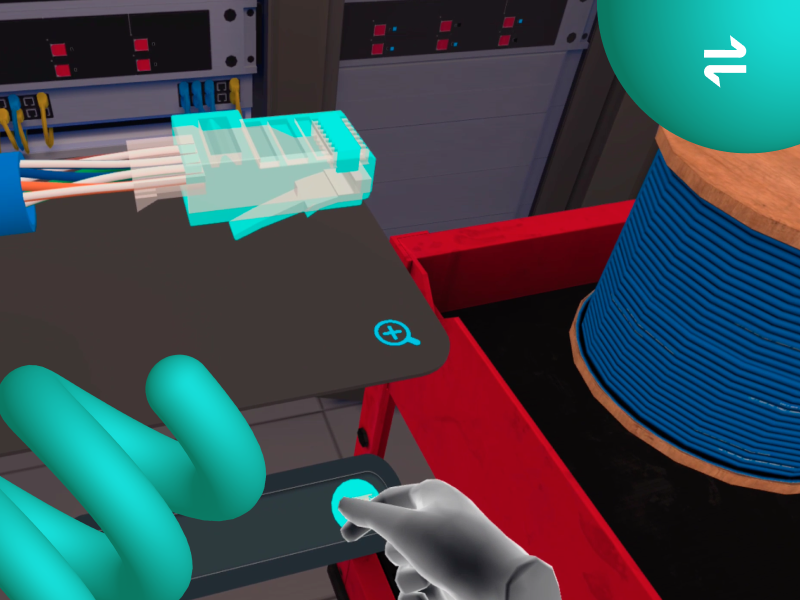
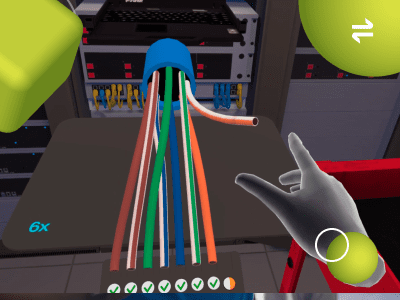
Immersive tools like virtual reality simulations can replicate workplace environments safely, allowing workers to practice skills repeatedly before applying them in real settings. This approach is particularly valuable for technical roles where mistakes during training could be costly or dangerous.
4. Integrate skills validation and industry credentials
Training without recognized credentials leaves workers unable to demonstrate their new capabilities to employers. Programs leading to industry-recognized certifications give completers a tangible asset for job searches.
How to make career pathways visible to displaced workers
When AI disrupts someone's current job, they often don't know what alternatives exist. Workforce boards can help workers see and access new career pathways.
Immersive career exploration tools
Many workers have never been exposed to careers outside their current field. Experiential tools, including virtual reality (VR) career exploration, let workers "try" jobs before committing to training. Someone who's spent years in retail might discover an aptitude for healthcare or skilled trades they never knew they had. This kind of exploration reduces the risk of investing time in training for a career that turns out to be a poor fit.
Connecting training to real employment opportunities
Training programs work best when they're directly connected to employers with open positions. Workforce boards can formalize these connections, creating clear pipelines from program completion to employment.
Outreach to underserved populations
Not everyone knows about available reskilling programs. Boards benefit from strategies for reaching workers in rural communities, non-English speakers, and those without reliable internet access and other barriers to employment. Meeting people where they are through community centers, libraries, faith organizations, and job centers often works better than expecting them to seek you out.
Effective training methods for AI-era workforce development
Different training modalities work better for different situations. Here's how the main approaches compare:
Virtual reality and simulation-based training
VR allows workers to practice job-specific tasks in realistic environments without risk. A manufacturing worker can learn to operate new equipment, or a healthcare worker can practice patient interactions, all before encountering real-world consequences. The ability to repeat scenarios until mastery is achieved makes this approach particularly effective for technical skills and provides employers with confirmation of competency-based skills relevant to the occupational pathway.
Blended learning approaches
Combining online coursework with in-person instruction or hands-on labs gives learners flexibility while maintaining the benefits of direct interaction with instructors and peers.
On-the-job training and apprenticeships
Earn-and-learn models reduce financial barriers for workers who can't afford to stop working while they train. They also give employers direct involvement in shaping the skills their future employees develop.
How to build employer partnerships for workforce alignment
Employer involvement isn't optional—it's essential. Training programs developed without employer input often produce graduates who don't match what companies actually need.
Engaging employers in skills identification
Convene employers regularly to define the skills they're looking for in new hires. These conversations reveal not just technical requirements but also the soft skills and work habits that matter in their environments.
Co-designing training with industry partners
When employers help design curriculum, they develop ownership of the program's success. This collaborative approach also ensures training stays current as job requirements evolve.
Creating hiring pipelines for reskilled workers
Formalizing commitments from employers to interview or hire program completers gives workers confidence that their training investment will pay off. It also gives employers a reliable source of qualified candidates.
Ensuring equity and access in AI reskilling programs
AI displacement doesn't affect all workers equally. Boards have a responsibility to ensure reskilling benefits those most vulnerable to displacement, not just those already well-positioned.
Prioritizing workers most affected by AI displacement
Identify which worker populations face the greatest risk, often older workers, those without degrees, and workers in highly automatable roles. These groups deserve priority access to reskilling resources.
Removing barriers to training participation
Practical obstacles often prevent willing workers from participating:
- Childcare assistance: Partner with community organizations to provide care during training hours
- Transportation support: Offer virtual options or provide stipends for travel costs
- Income replacement: Connect participants to support programs that help them meet basic needs during training
Designing inclusive program delivery models
Programs work for more people when they accommodate varying education levels, language needs, and disabilities. Integrating accessibility from the start serves everyone better than retrofitting accommodations later.
How to measure reskilling program outcomes
What gets measured gets improved. Workforce boards benefit from clear metrics to understand whether their reskilling investments are working.
Tracking skills acquisition and validation
Measure whether participants actually gain and demonstrate the targeted competencies. Pre- and post-assessments showing measurable skill gains, along with credential attainment rates, provide concrete evidence of learning.
Measuring employment and wage outcomes
Ultimately, reskilling programs exist to help people get better jobs. Track job placement rates and wage gains for program completers compared to their pre-program situations.
Using data to improve program design
Outcome data works best when it feeds back into program refinement. Programs that consistently underperform benefit from adjustment or replacement.
Preparing your community for the AI-driven workforce transformation
The communities that thrive in an AI-transformed economy will be those that prepare proactively rather than reactively. Workforce boards are uniquely positioned to lead this preparation by building infrastructure for continuous skills development, fostering strong employer partnerships, and ensuring that opportunity reaches everyone, regardless of background or circumstance.
Ready to explore how Transfr's immersive training programs can support your workforce board's reskilling initiatives?
Explore a partnership with Transfr to see how Transfr's VR-based career exploration and skills training solutions help workers discover new pathways and build job-ready skills.