Remember when someone asked you what you wanted to be when you grew up?
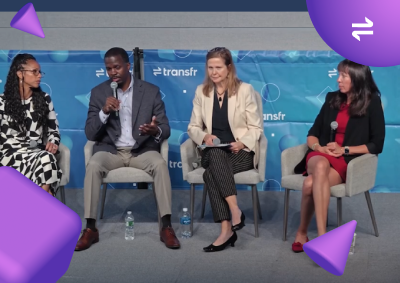
At a recent panel discussion, I posed this question to a room full of educators, workforce developers, and industry leaders. The answers were telling: an architect who became a business leader in technology. Someone who dreamed of being an attorney and became a principal. A future police officer who found their calling as a teacher in alternative education.
The truth? Most of us didn't end up on the path we imagined in elementary school. And that's exactly why the work we're doing together—across sectors, organizations, and industries—matters so much.
Watch The Webinar On-Demand
This blog is a recap of a live session from the 2025 XR Futures Conference. While you may have missed the in-person event, you can watch the recorded sessions on demand.
Dreams Aren't Unlocked in Isolation
Eric Black, CEO of MDI, a social enterprise employing 250 individuals with disabilities, shared something profound during our conversation: "Without experiential learning, these aha moments, dreams aren't unlocked."
He's right. We can teach durable skills in a classroom all day long, but without experience—without seeing yourself reflected in an environment, without trying on a career like you'd try on a coat—how do you know if it fits?
Eric confessed that when he chose to become an engineer (on his father's advice), he only knew about two kinds: the ones who drove trains and the one on Star Trek. It wasn't until his junior year of college that he truly understood what engineers actually do.
If that's the experience of someone who made it through college, imagine the disconnect for young people who never see themselves in high-skilled, high-wage careers at all.
The Middle School Moment We're Missing
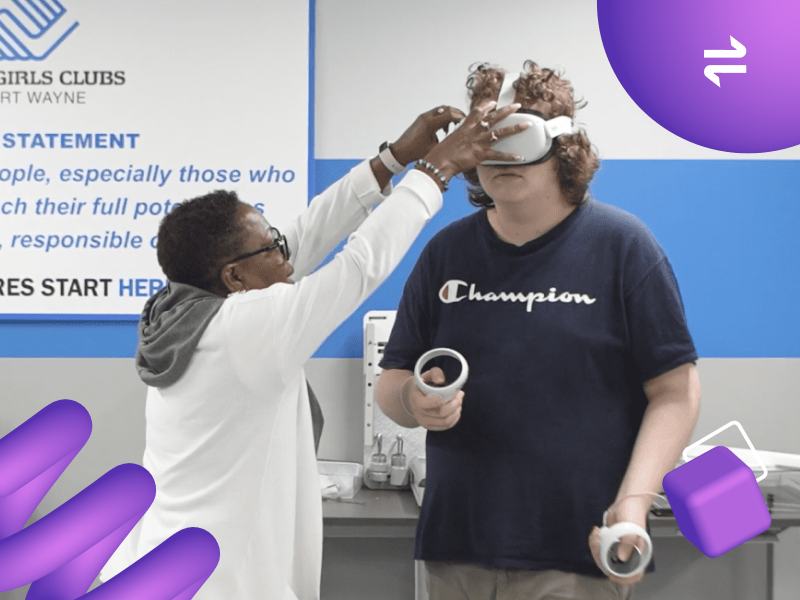
Joyce Glasscock, Executive Director of the Kansas Alliance of Boys and Girls Clubs, brought something unprecedented to her state: she convinced competing youth development organizations—Boys and Girls Clubs, YMCAs, 4-H, FFA, and Jobs for America's Graduates—to work together for the first time in Kansas history.
Why? Because middle school matters.
"Middle school seems to be the age, according to research, where it is truly important for young people to start that process," Joyce explained. Yet it's also "where the least amount of career funding seems to be placed."
In Kansas, there's one counselor for every 400 students. There's simply no way they can provide the individualized attention young people need to explore career pathways. And without that guidance, 13 and 14-year-olds are making decisions about high school coursework—and potentially their entire career trajectory—in the dark.
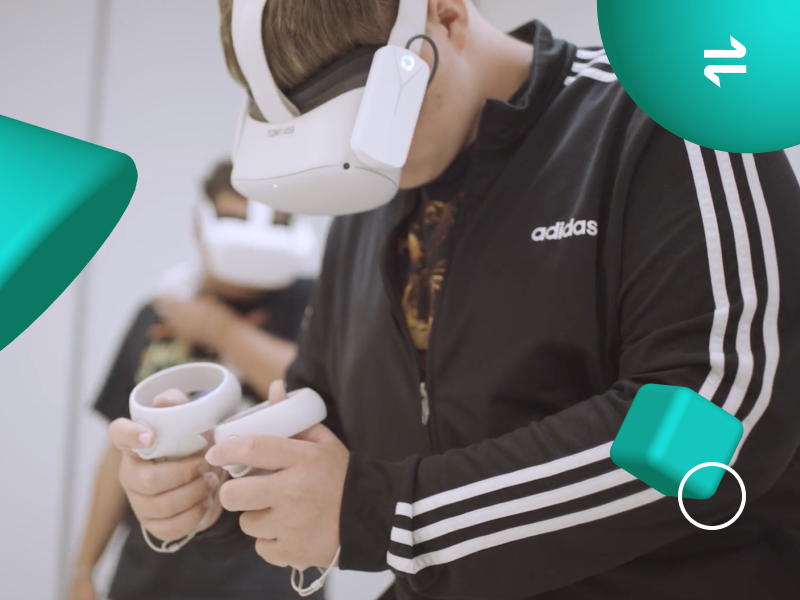
The collaboration Joyce built didn't happen by accident. It started with two people sitting in a room, both trying to figure out how to afford technology that could help their students, both realizing: "We can't get this done on our own."
From there, it snowballed. FFA joined because another organization was in. 4-H joined because FFA was in. The YMCAs couldn't let the opportunity pass. Together, they gained geographic coverage, demographic diversity, and the political leverage to secure state funding.
When Joyce presented to her member of Congress, his first response was: "Wow, I can't believe you got all these people to agree to cooperate and collaborate."
Her reply? "I can't really either because it's never really happened before."
When Boomers Put On the Headset
Joyce shared a moment that still gives me chills. She traveled to middle Kansas with colleagues from Transfr to pitch the Kansas Farm Bureau Board of Directors—mostly men in their sixties and seventies from generations of farming families.
One gentleman, after experiencing the technology, told her about his grandparents immigrating from Russia in the 1800s and settling in Central Kansas. In that moment, Joyce realized: "He was connecting the history from centuries before with the headset and the future."
That's when she knew agriculture was changing. And it was exciting—exciting enough that every single board member wanted to try multiple simulations. A meeting scheduled for twenty minutes stretched to over two hours.
The following week, they received a check.
The Industry Nobody Thinks About
Crystal Maguire runs the Aviation Technician Education Council, representing 215 FAA-certificated schools that train aircraft mechanics. These schools produce 80% of all new aviation technicians in the country.
Think about that the next time you board a plane.
Crystal launched a nonprofit in March 2020 (talk about timing) because she recognized a fundamental problem: "High demand jobs, not enough people to fill the jobs, not enough people to fill the jobs we have today, let alone the jobs that we'll need to support a growing industry tomorrow."
How do you get middle schoolers to consider a career they don't even know exists? How do you train them for highly technical, highly regulated work when you can't put an airplane in every high school? How do you address a 40% attrition rate in your programs?
For Crystal, partnerships with organizations like Transfr aren't just nice to have—they're essential to survival. "Not everybody's going to choose a job in aviation maintenance," she acknowledged, "but at least they'll know about it."
The Ecosystem Approach
Eric put it perfectly: "I think about scalability in terms of ecosystems."
Instead of trying to reach every high school individually, MDI partnered with Junior Achievement. They created a workforce development center in Junior Achievement's BizTown, where students from Minneapolis, St. Paul, and surrounding areas can experience everything from installing solar panels to performing knee replacements in simulation.
"Sometimes it isn't about pride of authorship or about you owning it," Eric said. "It's about making others successful and having access to your mission through others."
This is how you scale impact. Not by working harder in isolation, but by working smarter together.
What Industry Really Needs
I asked my panelists what the next big skill their industry needs. Their answers were remarkably consistent:
- Soft skills. Crystal didn't hesitate: "Give me a good employee and I'll teach them anything they need to know."
- Critical thinking and systems thinking. Eric pointed out that while AI is revolutionizing our world, many schools are telling students they can't use it. "We're institutionalizing undervalued learning practices rather than figuring out that we need to change."
- Communication skills. Joyce emphasized this as part of the overall professional skill set that makes someone truly employable.
But here's what else they need: affordable, scalable solutions. Joyce was candid about the challenge: some Boys and Girls Clubs in her network lost state workforce readiness funding and may not be able to continue their programs. "That is a tremendous loss for kids," she said.
The question isn't just what can technology do—it's how can we make it accessible to the students who need it most?
The Fight for Middle School
A middle school principal from the South Bronx stood up during our Q&A. "I am fighting, fighting—I can't even say pushing—fighting for middle schools to be the starting point for CTE education, for career exposure," he said.
His frustration is justified. We wait until high school, when students are "right at the precipice of moving into college or their lives as adults," missing the critical window when they're most open to exploration.
I'd argue we need to start even earlier. As a former third and fifth-grade teacher, I saw firsthand how engagement increases when students understand why they're learning math—when five plus five equals ten isn't just an abstract concept but something connected to real work in the real world.
Eric identified the core problem: funding is inconsistent. Decision-makers don't prioritize middle schoolers because "those are not the voters who are going to keep them in office." In districts where property taxes support schools, resources naturally flow to wealthier areas where students already have access to parents in interesting careers.
"The tools and tactics need to follow the biggest need," Eric said, "and that's where I think there's a disconnect."
The Call to Action
Joyce issued a direct challenge during our panel: "To our government relations staff at Transfr VR, I challenge you to approach the federal policy level with identifying funding and resources to go into younger people."
She's right. Current workforce funding through the Workforce Investment Opportunities Act typically doesn't support younger students. We're missing a huge opportunity.
"Had Freddie been involved in a Boys and Girls Club or another youth development organization, had he had the right people identifying potential opportunities and made him think, 'I want to be in school, I understand why I'm in school, and this is a way out'—those are the meaningful and important reasons why we try to invest in younger and younger people."
Building the Future Together
What strikes me most about these partnerships is their courage. Joyce convinced competitors to collaborate. Eric gave up "pride of authorship" to amplify his mission. Crystal is working to solve instructor shortages, attrition problems, and awareness gaps simultaneously.
None of them are doing this alone. They can't. The challenges are too big, too systemic.
But together? Together, they're reaching students in urban Kansas City and rural middle Kansas. They're creating pathways from middle school classrooms to $25-an-hour jobs for individuals with disabilities. They're making aviation careers visible to students who would never have considered them.
They're not just preparing students for jobs. They're unlocking dreams that were previously invisible.
As Eric shared: "We've taken a world that was meant for all people and made it good for some people. And so we've actually put systems in place that have made it difficult for individuals with all abilities to actually operate."
The answer isn't better technology. It's better partnerships. It's organizations willing to set aside ego and funding silos to ask: "Who else cares about this problem? How can we work together?"
Because when grandpa from the Kansas Farm Bureau connects his family's 150-year history to the future of agriculture through a headset, something magical happens.
When a student with an intellectual disability moves from a $14-an-hour job to a $25-an-hour process technician role—paid what they're worth, not what the market assumed they could handle—we all win.
When a middle schooler in the South Bronx or rural Kansas gets to explore careers they never knew existed, we're not just preparing them for jobs. We're expanding their sense of what's possible.
That's the power of partnership. That's what ecosystems can do.
And that's the work that keeps me waking up every day, grateful to be part of a team—a vast, collaborative, beautifully messy ecosystem of a team—that's changing lives.
What partnerships could you build in your community? Who else is working on the same problem from a different angle? I'd love to hear your stories of collaboration. Connect with me to continue the conversation.
Intestered in learning how Transfr can transform your learning program, and make career exploration fun for the learner and the instructor? Reach out today and talk with one of our Career Exploration experts!